Are glass floors safe?
Fatal accident in Indonesia
Some time ago, a tragedy occurred in Banyumas, Central Java. A glass floor on a tourist observation bridge cracked, resulting in two people falling from a height of several meters. Unfortunately, one of them died. This raises the question of whether popular attractions in the form of glass bridges and observation decks are safe. The answer is yes, provided someone doesn't make such a cardinal mistake as the designer of the bridge in Banyumas.
Tempered glass?
An engineer designing a bridge, to ensure maximum safety, will want to reach for the strongest possible material. In the case of glass, tempered glass provides the greatest strength because it has the highest bending strength. So it seems to be the obvious choice when designing a glass floor. This was the choice made by the designer of the bridge in Banyumas. Let's see if it was right.
Will the tempered glass hold up?
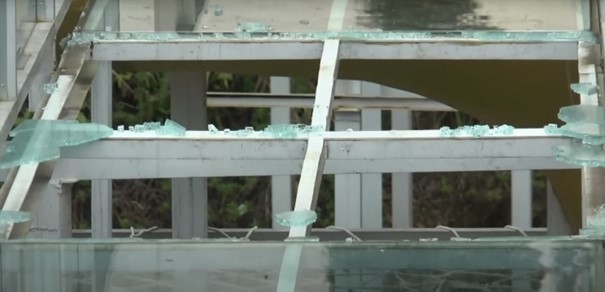
From information found on the web, it appears that the panel was a square with a side of 1.22 meters, supported as in the photo above. The thickness of the glass is 12 mm. I modeled such a case in SJ Mepla software for mechanical calculations of glass
I assumed 16 people weighing 100 kilograms each as the load.
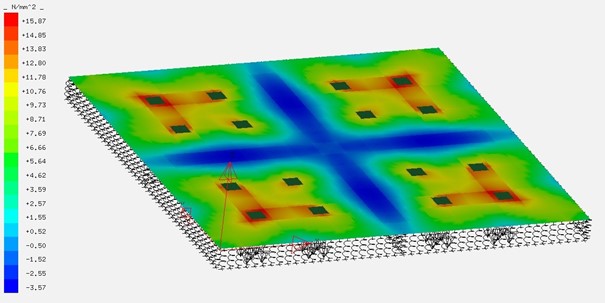
The simulation results show clearly - the glass will withstand without any problems. The maximum stress is 15.87 MPa, while the permissible stress is five times higher (80 MPa). So did the designer of the Banyumas bridge not make a mistake?
Yes, he committed. Because he did not take into account two, in this case key, disadvantages of tempered glass:
Tempered glass, despite its very high bending strength, has weaknesses. It tolerates point impacts badly, especially on edges. Hitting an edge with a sharp pebble pressed into the sole of a shoe can cause more damage than a dozen people standing on the sheet. In addition, tempered glass can even break completely on its own. This happens due to inclusions of nickel sulfide. I write more about this in an article about "exploding" glass tables: LINK.
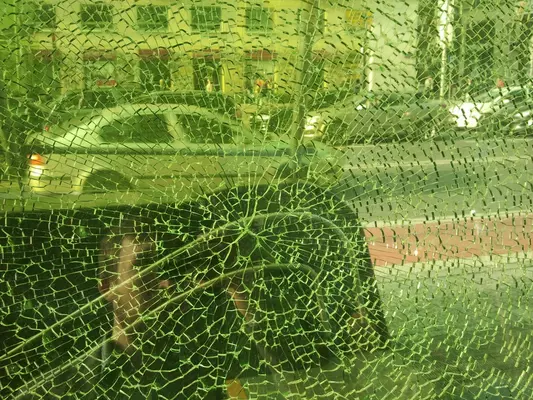
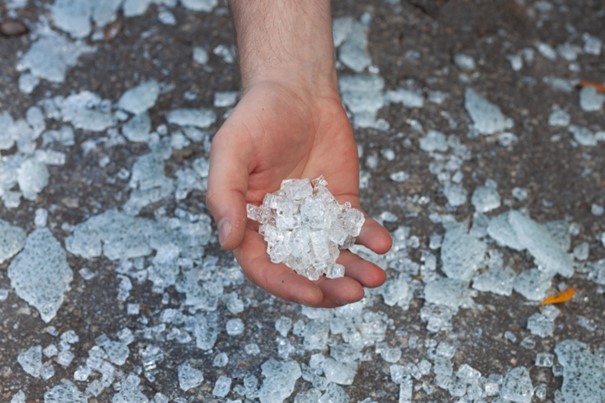
Tempered glass cracks into a fine poppy. Regardless of where the damage occurs, the sheet will always shatter all over. From the perspective of the person standing on it, tempered glass simply ceases to exist when broken. This is known as low (actually zero) residual load-bearing capacity.
Residual load capacity
An engineer designing a glass floor must ensure not only that it is strong enough and resistant to cracking. He must also ensure that the floor is load-bearing even if the glass breaks. In other words, he must ensure that the glass has adequate residual load-bearing capacity, that is, the ability to carry certain loads even after cracking.
A glass panel can have different residual load capacities, depending on the type of glass and the method of attachment
Tempered glass has zero residual load-bearing capacity. And that's what was installed on the bridge in Banyumas. And it was a mistake, costing human lives.
Laminated glass
Laminated glass, on the other hand, has the highest residual load capacity. It consists of at least two panes joined by a special film layer. It provides high residual load capacity, because after breaking the glass fragments are still glued to the film. Such glass is used, for example, as a car windshield. After any breakage, the sheet remains in the frame, and the fragments do not fall into the interior of the vehicle.
How is a glass floor constructed?
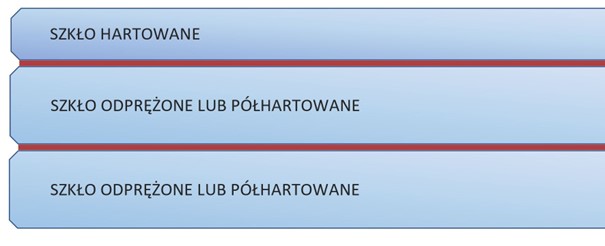
Glass floors usually use laminated glass composed of at least three panes. But the load-bearing function is performed only by the lower panes. They are responsible for safety. However, they are not made of tempered glass, even though it is the strongest. Annealed (regular) or half-tempered (thermally strengthened) glass is used here
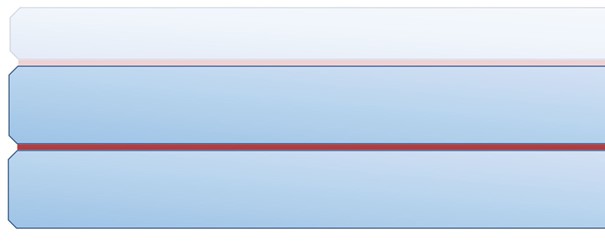
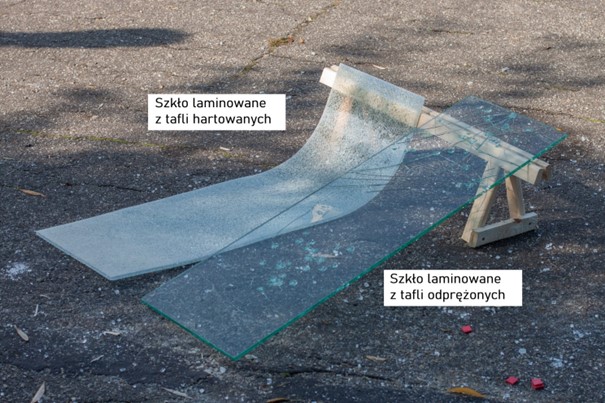
Why? Annealed, or semi-tempered glass breaks into large fragments. As a result, the glass fragments glued to the film provide much greater rigidity in the event of breakage of the sheet, that is, the just-mentioned residual load capacity. In contrast to tempered glass, whose small broken fragments glued to the film, make such laminated glass behave like a sheet and can slip out of the frame. You can see this perfectly in the picture below.
In other words, glass is selected using the following line of thinking:
"I won't use the strongest glass (tempered), because it will be a danger if it breaks. It's better to use weaker glass, which may break faster, but even if it breaks, it will still be safe."
Top layer - tempered glass
Thus, the two lower panes provide load-bearing capacity. The top layer, on the other hand, is made of tempered glass and protects the floor on the walking surface. But the load-bearing capacity calculation takes into account the case in which the top sheet is broken and puts additional load on the others. In other words, the calculations assume in advance that the top sheet is broken.
Therefore, its breakage will not affect safety. Moreover, if even all the components of the laminated glass broke, such a floor would still be able to carry certain loads.
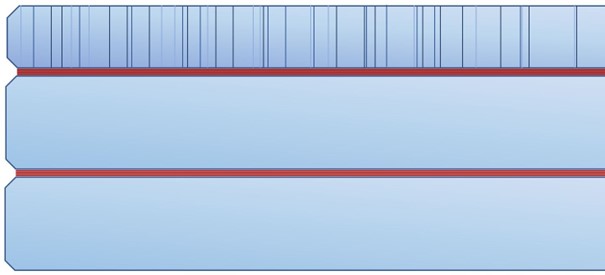
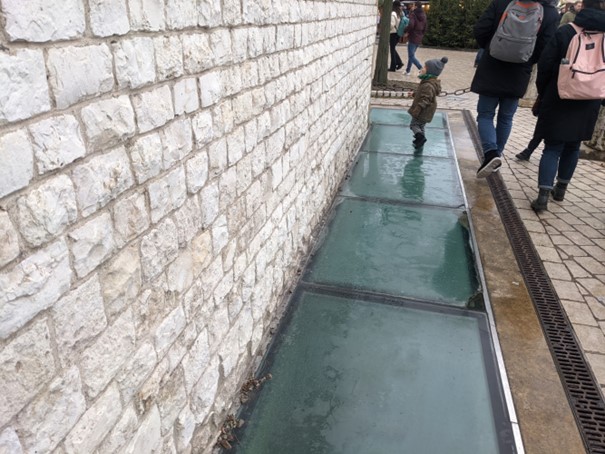
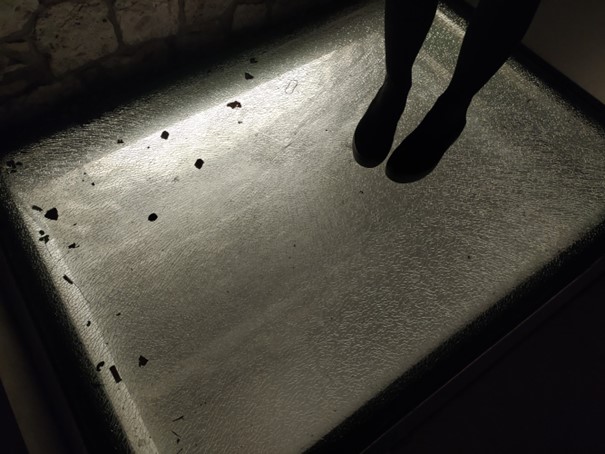
A properly made glass floor, despite the cracking of the top layer, is completely load-bearing. You can see the characteristic web of cracks on it, and yet you can jump on it without fear. Such an experiment can be performed in the Krakow market square. By the St. Adalbert Church, which stands there, there are glass platforms. Over time, almost all the top layers have cracked, but over the years they are not replaced. It is possible to walk on them, as the cracking only affects aesthetics, not safety.
Then how should the glass floor be constructed?
The top layer made of the strongest glass, namely tempered glass. It performs a protective function. Cracking of this layer can occur due to point impacts, or even spontaneously. Cracking, although it looks menacing, because it appears in the form of a spider web across the surface, does not affect the safety of using the sheet.
Two (or more) consecutive layers of annealed or semi-tempered glass of sufficient thickness. Usually 10-12 mm each. They are not as strong as tempered glass, but in case of breakage they are able to support a heavy load due to a certain residual load capacity.
- Layers of PVB film at least 1.52 mm thick are used between the sheets.
Back to the bridge in Banyumas. I read that it was not designed by an authorized designer. It was made by people familiar with tourism and not with structures. Hence such a tragic ending. However, such cardinal errors are extremely rare, and I will still insist that glass floors are safe.
Glass platform in Chicago
While doing a reaserch for this article, I also came across a description of an incident from the Willis Tower building in Chicago. A few years ago, on the glass terrace there suspended several hundred meters above the ground, the glass broke under the feet of tourists. And what, and nothing. It was covered with a menacing-looking mesh of cracks, caused horror, but nothing was supposed to happen. Because only the top layer, which does not affect the load-bearing capacity of the element, cracked.
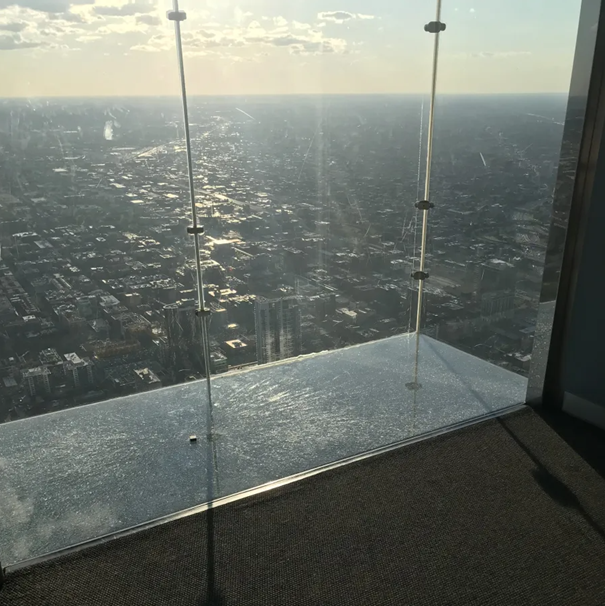
Source: https://www.thesun.co.uk/news/9284129/willis-tower-glass-ledge-cracks-video/
In an article about the event, the author wrote "Glass floors are not as safe as they seemed." I disagree. Glass floors are safe. But not because they don't crack. They do crack, and sometimes surprisingly easily. Glass floors are safe because they are designed in such a way that they perform their function even when completely broken.
Bibliography
https://jateng.tribunnews.com/2023/10/25/update-dpu-banyumas-periksa-jenis-dan-ketebalan-jembatan-kaca-the-geong-hutan-pinus-limpakuwus
https://usglassmag.com/2023/10/tragedy-strikes-as-glass-bottom-bridge-shatters-in-indonesia/
https://noizz.pl/design/szklana-podloga-na-103-pietrze-willis-tower-pekla-pod-stopami-turystow/hg6yv4e