
Why does glass break from roller shutters?
Thermal cracking of glass
I was prompted to write this article by the situation in the block of flats where I have been living for several months. It is a new block of flats, with double-hung windows reaching almost to the floor. In addition, a significant number of apartments have south-facing windows. All of this promotes the possibility of conditions in which glass can crack when exposed to temperature. Not surprisingly, over these few months, glass spontaneously cracked at least four of my neighbors.
Does high temperature damage glass?
Soda-lime glass used in construction is resistant to very high temperatures. The theoretical limit here is the temperature at which the glass becomes plastic, which is several hundred degrees Celsius. However, such
a temperature cannot be reached under normal conditions. The heating of glass is therefore not dangerous in itself. What is dangerous is its uneven heating.
The real danger - uneven heating of the glass
Standard annealed (i.e., non-tempered) glass used in classic windows can withstand a temperature difference of about 40 degrees. This means that if part of the sheet heats up, for example, to 60 degrees Celsius, and in another place on the same sheet, at the same moment, the glass will have a temperature of 20 degrees, then the temperature difference will be 40 degrees and the glass may crack due to the stresses that occur.
Usually, the coldest point of the glass is the part hidden in the frame, because there the sun has no access to the glass.
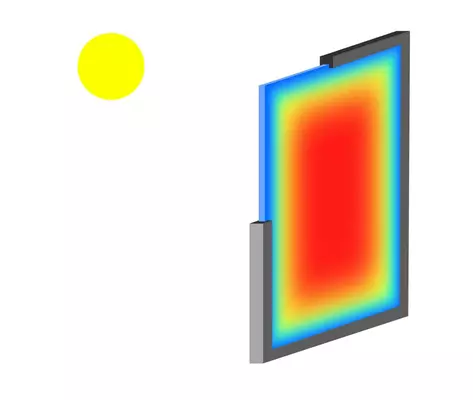
However, it is worth mentioning here that this limiting temperature is not always exactly 40 degrees. It depends on many factors, such as the way the glass is fixed in the frame, the quality of the glass edge treatment, the angle of the window mounting, etc. The sizes of the heated and cooler zones also matter. However, considering standard residential construction in Poland, a safe value of 40 degrees can be simplified. Those hungry for knowledge are referred to the French standard NF DTU 39, which contains a number of tables with limit values for various cases.
A little physics
How does it happen that glass breaks thermally? This is due to the fact that:
- glass is a brittle material,
- glass (like any material) expands when exposed to heat.
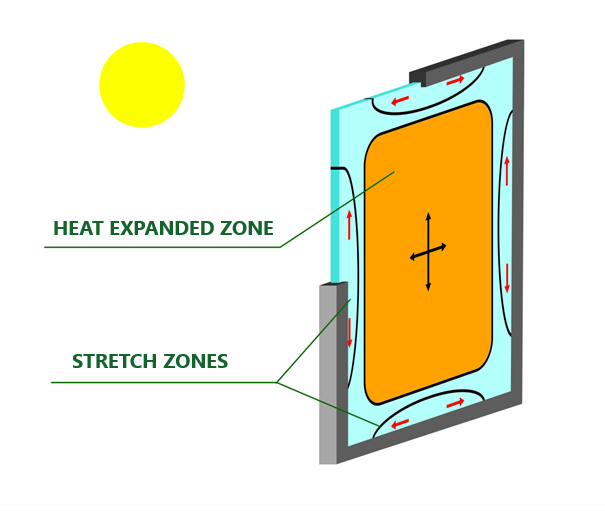
If one part of the glass heats up and another remains cold, the former will increase in volume and the latter will remain volumetrically smaller. Thus, tensile stresses will be created, and since glass does not like
to stretch, the permissible stress value will be exceeded quite quickly and the glass will break.
How to recognize a thermal crack?
Awareness of thermal cracking is very low. And I'm not just talking about residential customers. Even our developer in his responses to complaints decries glass breakage caused by impact. This is strange because thermal breakage is relatively easy to recognize and is usually difficult to confuse with mechanical damage.
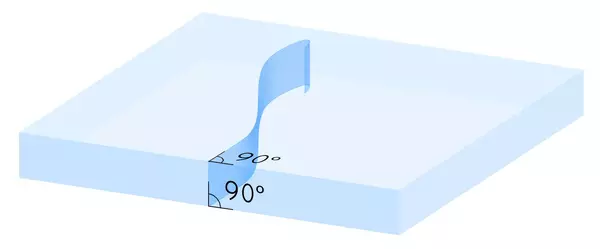
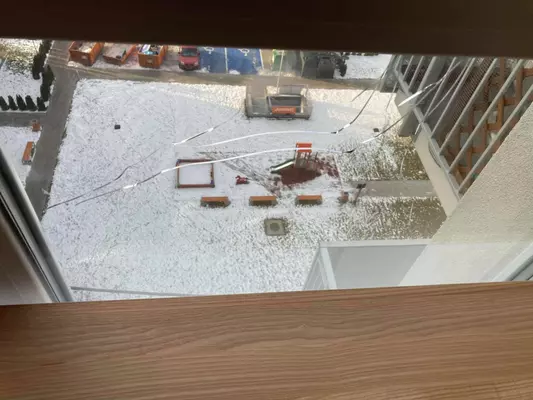
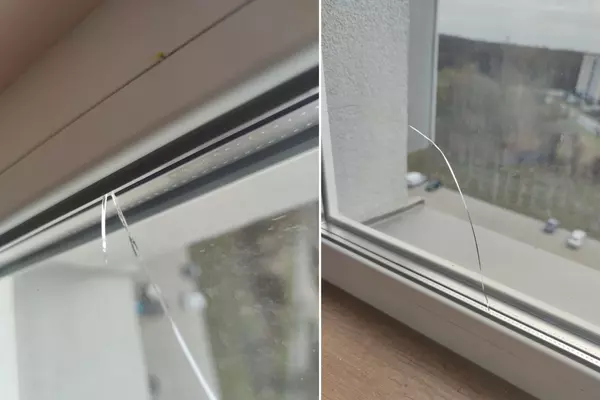
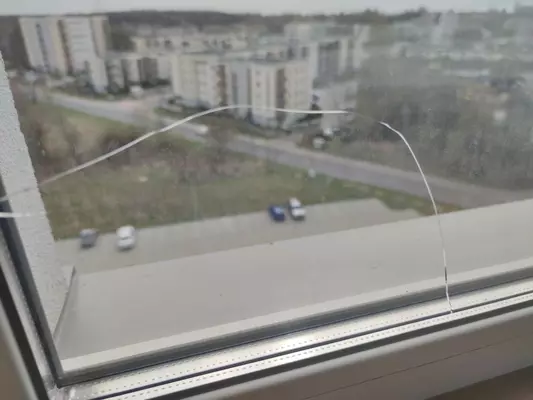
In the figure below, I have shown typical crack nets formed due to temperature differences in glass.

The thermal crack starts at the edge of the glass. Moreover, it exits the glass usually at right angles both horizontally and vertically. However, it is not always visible in the window, as the edge itself is obscured by the frame and gasket. Sometimes to observe this it may be necessary to pull the glass package out of the frame.
How does it work in practice?
In order to protect ourselves from thermal cracking of window panes in our environment, it is useful to know what situations can lead to this and simply avoid them. So below I describe the three most common causes of thermal cracking of window glass.
It is worth mentioning right away that the risk of thermal cracking due to sunlight depends on the side of the world towards which the glazing is facing. Of course, the worst situation will be on the south side. From the west and east, the maximum temperatures (and therefore the maximum temperature differences) will be lower, so the risk of thermal cracking will also be lower, although still likely. From the north, on the other hand, the risk is practically non-existent.

1. Blinds, shutters
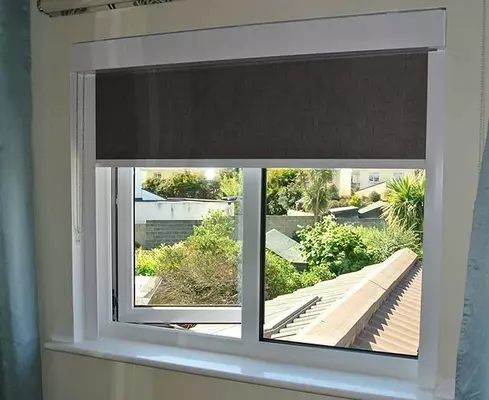
Blinds and shutters are one of the main causes of thermal cracking of window glass. However, this is primarily about blackout blinds, which do not let light through. In addition to visible light, they also do not transmit infrared waves, or heat energy. This heat is accumulated between the glass and the blind/blind and heats up the glass. At the same time, the glass hidden in the frame remains cooler, thus creating dangerous temperature differences.
The problem with blackouts is that they are usually installed so that they do not let light through at all. So guides and slats are used, closing any gaps through which light can enter the room. The problem is that these crevices also serve to ventilate the space between the glass and the blind. If they are closed, air circulation is blocked. This results in an increase in the temperature of the glass, which in turn can lead to cracking of the glass.
How to deal with it?
- It is best not to use blackout blinds/blinds. It is worth installing ones that let the light through at least a little. Especially on the south side.
- It is worth taking care of proper ventilation of the space between the glass and the roller blind/blind. It is best to dispense with guides and also, if possible, leave a ventilation gap at the top. Warm air is directed upward, so the opening at the top will be most effective.
- It is better to cover blinds/blinds fully than halfway. In the latter case, only half of the panes will heat up, causing a greater risk of thermal cracking.
2. A piece of furniture pushed against the glass
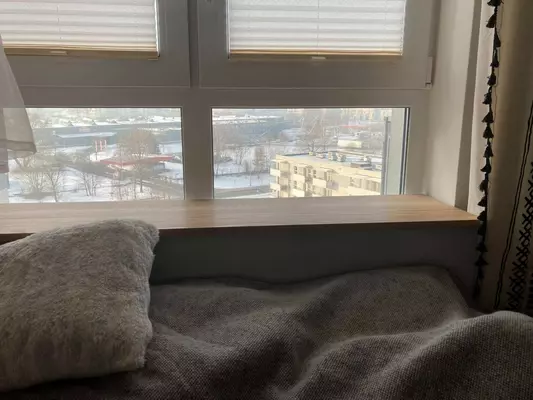
Another case that occurred in my block has to do with the fact that our windows start very low above the floor. This looks beautiful, and the rooms get a lot of light, but it often causes problems with space arrangement. Residents sometimes push furniture right up to the window, which creates the danger of thermal cracking.
As with roller blinds, warm air accumulates in the closed and often unventilated space between the furniture in question and the glass. The color of the furniture itself does not matter much here, as both dark and light colors pose a danger, although the mechanism itself is somewhat different.
- Black elements absorb heat, that is, they heat up. And then they give that heat back to the glass. Simple.
- White elements might seem to be safer because they heat up less. Yes - the heat energy is not absorbed by the element as in the case of black color. Instead, it is reflected and passes back through the glass. And since modern glass is covered with high-tech coatings that prevent heat loss from the dwelling, these reflected rays also have a problem getting through the glass. As a result, they accumulate in the glass and further heat it up.
How to deal with it?
It is best not to push anything against the glass. If anything, materials that will quickly transfer this heat to the other side. Wood or furniture board will not be a good idea here, due to its relatively high thermal resistance.
It is also worth taking care of the ventilation of the space between the furniture in question and the glass. Warm air should be able to circulate freely.
3. Objects lying on the windowsill
Another case that happened in my block of flats is a crack caused by.... a pillow lying on a windowsill. The low windowsills in this building create a temptation to put various objects on them. The more thermal resistance such material has, the worse for the glass. The cushion, due to its properties, poses a very high risk of thermal cracking when lying directly against the glass on a sunny day.
How to deal with it?
Do not put objects that are slow to give off heat (they have high thermal resistance) on the windowsill. Take special care that they do not touch the glass. In addition, any objects that strongly reflect light can also affect the dangerous heating of the glass.
Other dangers
- Large stickers on the glass.
- In some cases, dark external blinds, especially when they are covered halfway through the glazing and have no vents at the top.
- Suspended ceilings overlapping the light of the window (mainly commercial construction).
- So-called spandrels, or opaque parts of glass facades (mainly commercial construction).
- Radiators mounted near glazing.
- In cars, on the other hand, it is worth remembering not to pour hot water over the windshield in winter, or direct a strong stream of warm air onto the glass. Thermal cracks in the windshield of a car are very common in winter.
Triple-glazed windows
Someone may say that he has had blackout blinds in his apartment for years and the glass has never cracked. Yes, until now the phenomenon of thermal breakage was relatively rare because the standard was single-chamber packages, that is, composed of two panes of glass. In this type of glazing, you really have to make an effort to bring about conditions at which the glass will thermally crack.
However, current regulations enforce the installation of double-glazing (three panes of glass). As a result, for several years now, all new buildings use only this type of glazing. Double-glazed packages are much better insulators, but a side effect is that it is much easier to cause thermal cracking in them.
Will hardening help?
The solution to all of the above situations, would be to use tempered glass, which has a much higher resistance to temperature differences. The limit here increases from 40 degrees to more than 200. In practice,
this means that with tempered glass it is very difficult to have conditions in which the glass will thermally break.
Nevertheless, the installation of tempered glass in classic residential glazing does not make economic sense. In most cases, the benefits of tempered glass are disproportionate to its price.
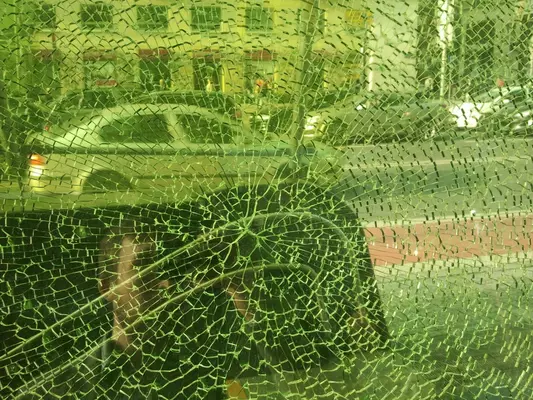
Once the glass breaks
What if the glass has already cracked? Unfortunately, most manufacturers do not provide guarantees against thermal cracking. In addition, most home insurance also does not cover this type of damage. So it will be necessary to replace the glass at your own expense. However, it is not necessary to replace the entire window, but only the glass package, which can be relatively easily removed from the window frame.
Summary
The block of flats where I live is heavily exposed to the risk of thermal cracking of glass for several reasons:
- The windows feature highly insulating triple-glazed packages.
- The windows start low above the floor.
- A large number of windows face south.
- The first factor is already standard on the market, as it is enforced by current regulations. The second is also found in most new apartment blocks. It is difficult to do anything about the third, so.... the key factor seems to be the fourth, viz:
- Very little public awareness of this threat.
So I hope this article will help bring more attention to the threat of thermal cracking of glazing in our homes. Today's dwellings, with well-insulating, large glazing, are more prone to thermal cracking than windows
of twenty years ago. Therefore, awareness of this danger is much more necessary today if we want to avoid costly replacement of cracked glass.
Bibliography::
• Norma NF DTU 39.
• http://www.skpstiklas.lt/thermal-cracks/
• https://buildingconnection.com.au/2016/07/29/how-to-avoid-thermal-breakage/