
Interview with architect Marta Sękulska-Wrońska

EVERY PROJECT IS THE MOST IMPORTANT
An interview with architect Marta Sękulska-Wrońska
Architecture is a profession that requires both technical and mathematical skills as well as sensitivity to the context and history of the surroundings and human needs. One way to develop these skills is to put one's heart into every project and subject it to evaluation. Architect Marta Sękulska-Wrońska from WXCA studio, president of the Warsaw Branch of SARP, competition judge, and juror in the Saint-Gobain Glass Design Awards competition, talks about her approach to design, experiences with criticism, and the responsibility that comes with evaluating the work of others.
How did you imagine the profession of an architect when you were studying and at the beginning of your career?
Marta Sękulska-Wrońska: You enter the profession of an architect with your whole heart—it is a passion that completely absorbs you. I was fascinated by everything about it. During my job interview for my first job in my fourth year of studies, I said that I definitely wanted to learn about administrative matters because I felt that I had already mastered the creative aspect. I was interested in how to make what was drawn become reality. The investment process intrigued me deeply. I learned it quickly, but it constantly evolves, and like any architect, I must continuously update my knowledge. However, what fascinated me the most was the relationship with people—I wanted to be on the front line of contact, to absorb emotions and needs, and respond to them. That’s why I quickly established my own company. I felt the need to fulfill people's dreams, bring visions to life, and create something that would ultimately be both beautiful and functional.
Many architects say that they often take on the role of a psychologist.
At WXCA, we call this sensitivity, which has different aspects—sometimes it concerns the landscape and the context in which architecture emerges, and other times it relates to the very personal needs of specific individuals. When designing public utility buildings, we also pay great attention to the values that these structures should convey, often for many years. Skillful use of symbolism—or its absence—affects interpretation.
As the Warsaw Branch of SARP, we cooperate with an architectural and construction technical school, where we have a patron class. During meetings with students, I emphasize how important the Polish language subject is, which is not typically associated with architecture. Interpreting poems and other literary works is an excellent way to develop sensitivity, which I personally gained from Polish language lessons in high school. Only later did I attend preparation classes for the architecture faculty entrance exam, which then directed my sensitivity towards visual arts.
So, contrary to common belief, architecture is not only an exact, mathematical, and technical science but also partly a humanities discipline?
Architecture has many aspects, and it is incredibly important to align them with one’s personality. From the very beginning, we have envisioned our studio as a platform for developing the talents of all team members. The team is all the more valuable the more diverse it is in terms of personalities and skills. Sometimes there is a need for parametric, engineering-oriented architecture and technical sensibility, but equally important are elements of beauty and sensitivity, especially when working on projects that must be harmoniously embedded within a specific context. Sometimes, half of the team’s time is spent analyzing and searching for the context, and only after “charging the batteries” with these humanistic values do they engage in creation.
As a student and aspiring architect, did you feel the need to participate in competitions and showcase your projects?
Yes, during my studies, I frequently entered competitions, and I had a talent for forming teams—I encouraged my colleagues to join me. One of our first successes was a distinction in a competition for the development of the Vistula Boulevards below the Royal Castle in Warsaw. You could say it was a dream topic because it required sensitivity to context and history, but also to the future—combining two seemingly contradictory values: the past and modern needs. That’s how it started. That year was incredibly intense for me—I was preparing my engineering thesis, competing in AZS alpine skiing championships, and juggling numerous activities. Each day was packed, but this perfect balance—between the passion for design, the energy and endorphins from sports, and the positive people around me—was a tremendous driving force.
An architect’s work is constantly subject to evaluation. Does participating in competitions prepare you for criticism?
I first encountered the fact that not everyone likes being judged when I attended a drawing school. For me, criticism was valuable and motivating—I felt that was exactly why I was there, to learn, improve, and ultimately pass the architecture faculty entrance exam, where competition was fierce (33 applicants per place). Some people quit the classes because they couldn’t handle the pressure. Perhaps it was easier for me because I attended music school, performed concerts regularly, and was used to being evaluated. Subjecting yourself to judgment, especially in competitions where submissions are anonymous, is a great way to grow—if we don’t win, we can analyze what someone else did better, what they considered that we overlooked. This is invaluable. As architects, we are constantly being evaluated. Within our team, we often discuss that we create phenomenal projects, but we must also know how to present them and persuade others to support our vision. Unfortunately, rhetoric is not taught in Poland at all. A valuable experience for me was Professor Kuryłowicz’s class, where we had to present our project in 60 seconds. The emotions tied to the assessment—not just of six months of work, but also of how I presented the project in one minute—were enormous. I loved it; perhaps my competitive spirit came out. The emotions while waiting for competition results are very similar, even addictive.
You have won many competitions and awards. Which ones are the most valuable?
When you immerse yourself in a topic, at that moment, it becomes the most important. There is no project into which we don’t pour our hearts—when we are workshop-focused with the whole team, that is the most important project in the world. We always wonder what we can do to make it better and how to support the team. The greatest reward is realizing the dream we put so much work into. Seeing your creation built is indescribable—you have to experience it. One such moment was seeing the Polish Pavilion at EXPO 2020 in Dubai, which was incredibly well received. The joy was twofold—first, that it was our team’s work, and second, that Poland had such a fantastic representation. We also receive great feedback about the European Centre for Geological Education in Chęciny, which is now open to visitors. These are wonderful emotions and a sense of having done something valuable.
One of your projects, the Five Corners Square, is located near your WXCA studio. It sparked many emotions.
We are delighted that the square is full of life. Despite media controversy, which we were aware of and experienced, we see how the space functions daily—young couples take wedding photos, children play, and there are many pedestrians and cyclists. It’s a space that previously didn’t exist and has now been filled. There will always be critics, but real life is the best defense, and that is the greatest reward.
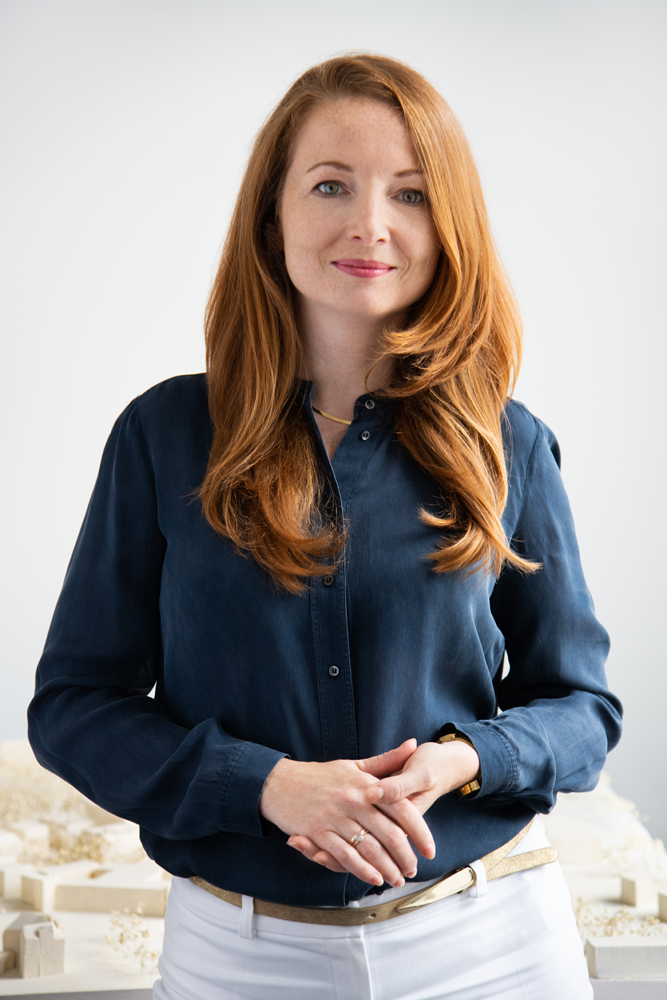
*Photo source WXCA studio
Honorary patronage of the contest:
Łódź Design Festival, Stowarzyszenie Architektów Polskich (SARP), Wydział Architektury Politechniki Warszawskiej
Media patron of the competition:
Architektura&Biznes, Elle Decoration, Architecture Snob, WhiteMAD, Designteka.pl, Foorni.pl, Czas na Wnętrze, MAGAZIF.com, Bryła, Design Alive, Architektura Murator, Urządzamy.pl, Sztuka-wnętrza.pl, Sztuka-architektury.pl, BIZNES.meble.pl, Domosfera.pl, LABEL, Builder
.