

PROJECT DESCRIPTION
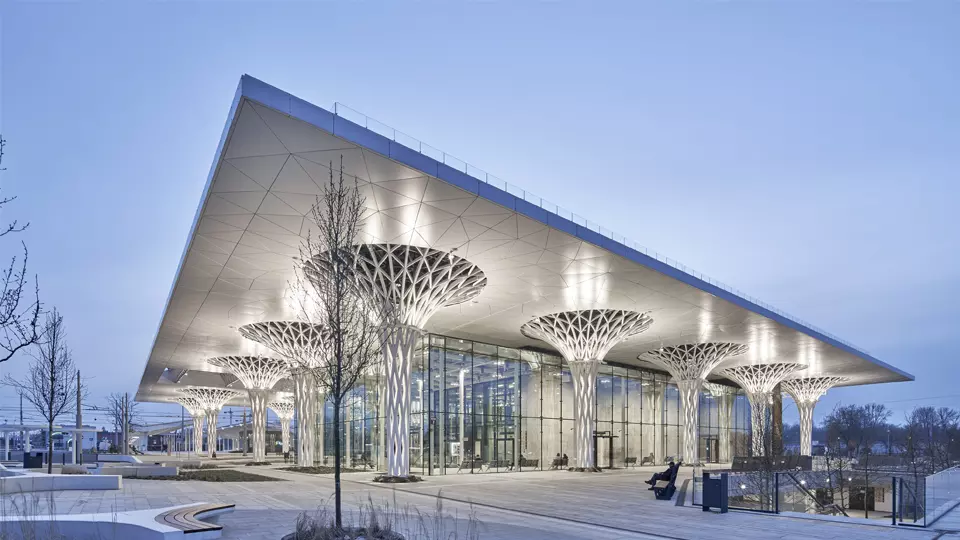
The Lublin Metropolitan Station has been officially opened to passengers. The widely discussed project was designed by the Tremend architectural studio, and among the materials used are solutions from Saint-Gobain Glass, which provide comfort to travelers and help reduce the carbon footprint of the investment.
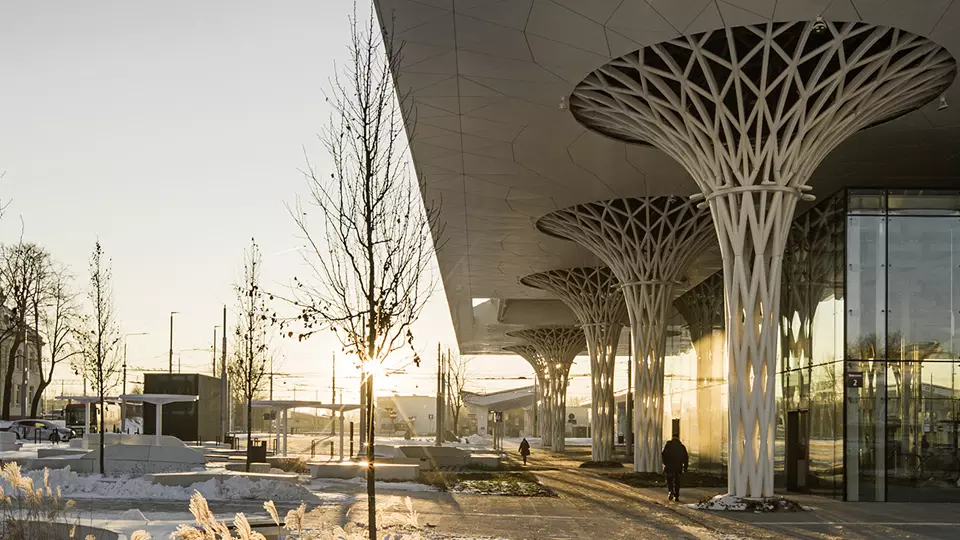
The newly opened Lublin Metropolitan Station, located in the heart of the city, together with its adjacent infrastructure, is part of the emerging Integrated Communication Center in Lublin. In the near future, it will become a key transport hub connecting local, regional, and national transport networks.
The station is a three-story building with a usable floor area exceeding 18,000 m². A distinctive element is the roof designed as a viewing terrace with a recreational area for passengers, and the “box in the box” construction with a glass façade offering excellent performance features that ensure energy-efficient use of the building.
Lublin Metropolitan Station Wins Architectural "Oscar"
From November 6–8, the World Architecture Festival — one of the most prestigious architectural events globally — took place in Singapore. The awards presented at this event are often referred to as the “Oscars of architecture.”
Tremend’s project was unrivaled in the “Transport” category.
“Winning the top prize at the World Architecture Festival in Singapore is a great surprise and an enormous honor for us. The WAF Award is one of the most prestigious international distinctions in architecture. Every year, leading architectural studios from around the world participate. This year, in the 'Transport' category, the Lublin Metropolitan Station competed with projects by studios such as Zaha Hadid Architects and Kohn Pedersen Fox.
This recognition is particularly gratifying because it was a demanding project worked on by a large team of Tremend architects.
The main goal of our Integrated Communication Center project in Lublin was the revitalization of the area surrounding the historic PKP railway station. Integrating all modes of transport in one place while implementing the highest number of pro-environmental solutions required significant effort, creativity, and expert knowledge.
This award confirms that we succeeded in making the station building passive, visually interesting, and user-friendly. One of the most intriguing eco-friendly features is the building’s very form — the ‘box in the box’ concept. Thanks to glass partition systems and heating/ventilation solutions, only the inner ‘box’ is actively heated, while the surrounding waiting area is warmed via air recovery. For such a large usable space, it’s truly an innovative solution. That’s why this complex project brought us enormous satisfaction.”

CHALLENGES
Both the project and its implementation posed numerous challenges for the investor and architects. The top priority was ensuring passenger comfort — the newly designed space needed to offer a peaceful resting place. In addition to user comfort, environmental aspects such as energy efficiency and emissions were key to the investor. The answer to these challenges was architecture conscious of sustainable development and the use of modern building materials.
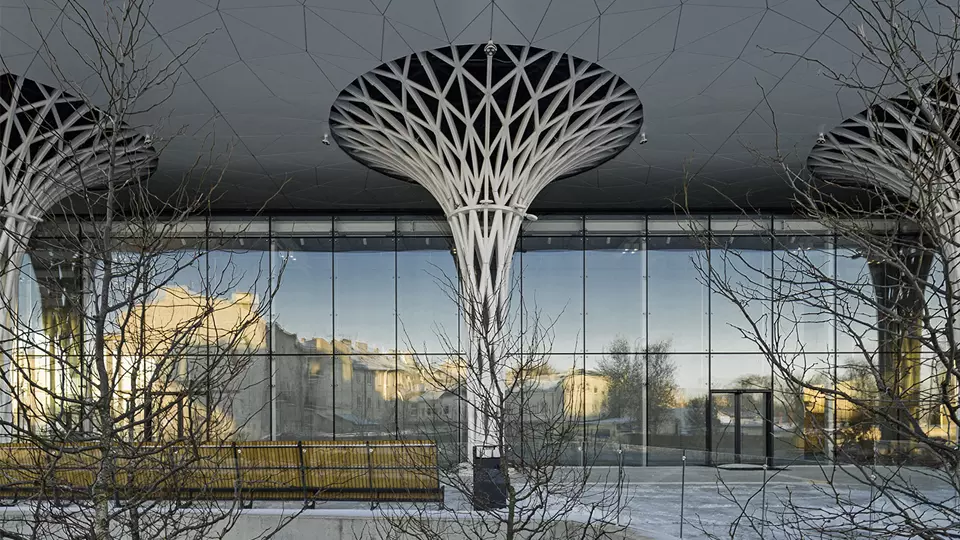
A station is a space of constant movement, so its conditions must support the well-being, comfort, and safety of passengers — whether rushing to catch a train or waiting for one. The creation of the glass assembly was a unique undertaking. The designer aimed for the most transparent, homogeneous glass surface possible, free from any visual interruptions. That’s why U-profiles were used in the double-chamber glazing units, embedded in silicone within the MB SR 50 EFEKT system. This is the only solution of its kind on the market, making it a distinctive signature of this investment.
IMPLEMENTED SOLUTIONS
The architects at Tremend had to meet specific requirements when designing the Metropolitan Station. The clients emphasized the need for a well-lit space with high aesthetic quality. Thanks to the glass façade, thermal comfort was achieved despite high solar exposure, while minimizing the need for air conditioning.
How was optimal lighting ensured while reducing artificial light usage and evoking a sense of spaciousness after travel?
DIAMANT® – a special type of base glass that, thanks to an iron-removal process, is perfectly transparent, provides clear views, and allows optimal natural light transmission.
Large-format glazing often evokes a greenhouse effect — but since client comfort was a priority, a solar control coating was used. The final façade solution included:
COOL-LITE® XTREME 70/33 II (solar factor g 23%, LT 61.1%) on DIAMANT® glass base
ECLAZ® ONE II also on DIAMANT® glass base
These solutions were chosen for their excellent light transmission and thermal insulation properties, effective both in summer and winter. The glazing was installed with point-fix connections and glass fins. Given that the space is public, all glass was used in tempered versions for safety.
The greatest challenge was the internal “box in the box” façade made with TGU (Triple Glazing Unit) — a double-chamber unit composed of three glass panes. It utilized three different products to ensure optimal health and well-being for users.
"Box in the Box" Innovation
The internal glass walls of the “box in the box” concept not only bring lightness to the interiors but are also highly functional. One particularly noteworthy feature is the use of PRIVA-LITE® switchable glass, which:
Ensures privacy on demand
Maintains high light transmission (in both states)
Allows the space to be opened and expanded visually
PRIVA-LITE® glass is invaluable for day-to-day work when focus and isolation from distractions are needed. Its benefits also include easy cleaning, simple switching of transparency, and guaranteed safety (PRIVA-LITE® is laminated glass).
© Bartosz Makowski
© Rafał Chojnacki
© Rafał Chojnacki
Related products
COOL-LITE® XTREME 70/33 (II)
Ekstremalnie selektywne szkło przeciwsłoneczne.

ECLAZ® ZEN (II)
Szkło niskoemisyjne nowej generacji, stworzone dzięki innowacyjnej technologii.
DIAMANT®
Super przejrzyste szkło o niskiej zawartości żelaza.