

How to win international competitions?
An Interview with Architect Jan Sikora
"Vision is crucial, you must always strive and simply work hard." Professor Jan Sikora, owner of Sikora Interiors and winner of numerous prestigious awards on the global design scene, shares insights on how to succeed in international (and other) architectural competitions. In 2022 alone, his studio won nine such awards!
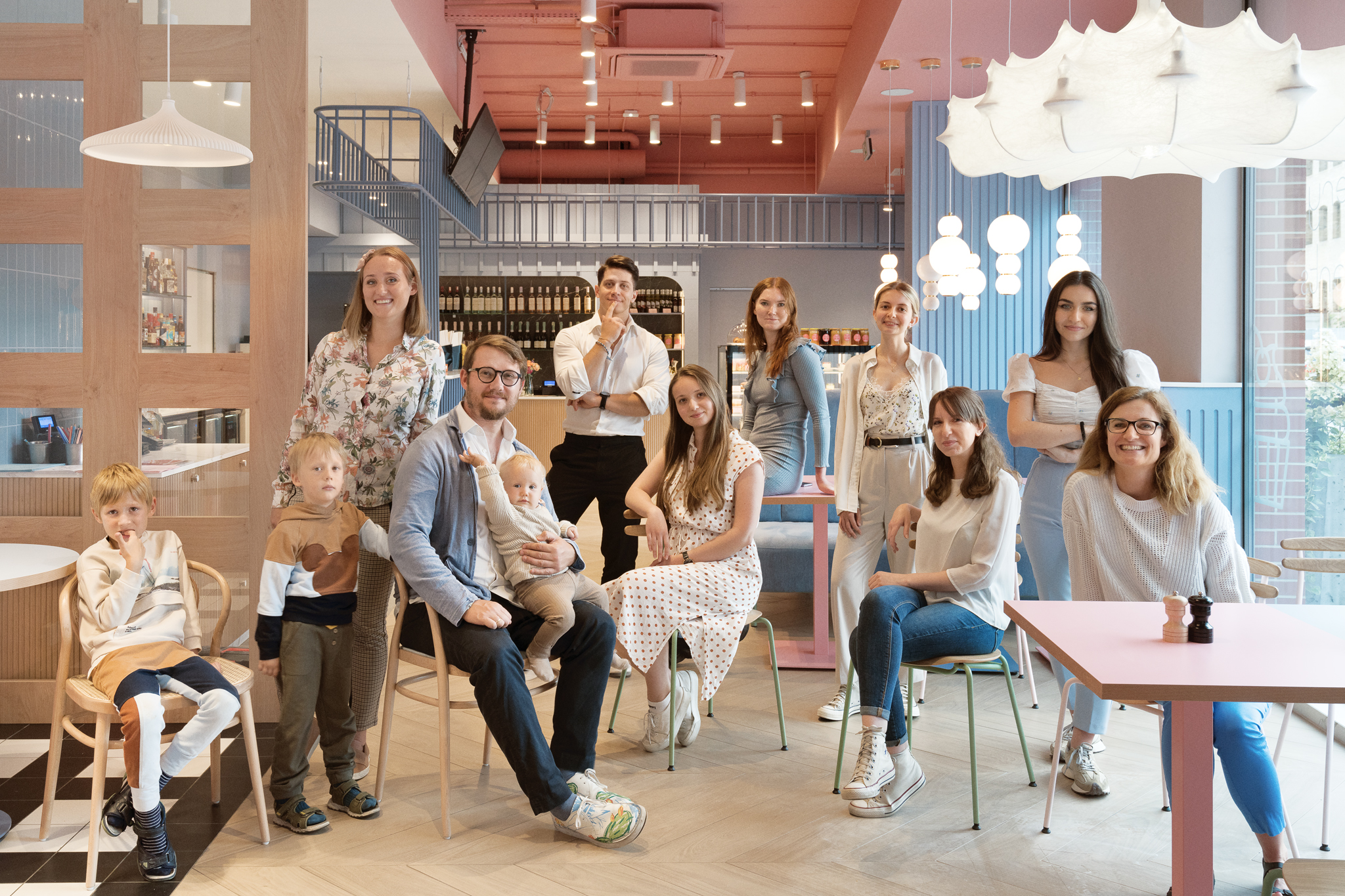
This year, one of your latest projects—the Sylwia Gaczorek salon—achieved spectacular international success. It has received several prestigious awards. Which ones?
Jan Sikora: Several major awards. The first was the Arch Design Award 2022, where we won a gold medal, tying with Google's new headquarters in Madrid. We also secured first place in the World Design Award 2022, another highly prestigious competition. There were others too, such as second place in the Rethinking The Future competition and third prize in the International Architecture & Design Awards 2022. Additional recognitions include the Loop Design Award and the DSM Awards, where we received an honorable mention. There were quite a few, which came as a very pleasant surprise to us.
Nine international awards in just one year is truly impressive. Do you have a formula for winning? Is there a golden rule for success? Could you share how these awards are won?
J.S.: I believe the most important thing is the goal that a designer sets for themselves. For me, it all started with the idea of creating a studio focused on interiors with a highly unique and artistic character. That’s what matters most to our team—designing projects that catch the eye and have a touch of boldness. For example, the Sylwia Gaczorek salon was a daring venture, thanks in part to the investor herself, who trusted us and allowed for this creative freedom. International competitions appreciate originality and innovation, always looking for something progressive. We also devote a lot of time to perfecting the visual presentation of our projects. Sometimes, we spend hours in the studio researching competitions, analyzing rules, submitting projects on time, and describing them properly. It is time-consuming. The secret might be to integrate this effort into everyday work. Whenever there’s an opportunity for growth within the studio, we take it.
This year has not been the easiest, even for the design industry. How did you find the space for growth and competitions?
J.S.: That’s true. When uncertain times came, driven by the unfortunate war in our neighboring country, there were two strategies—either succumb to discouragement and fight for mere survival or take a proactive approach and focus on constructive growth. This period brought our team closer together—our efforts to support Ukraine, weekly meetings at the donation center, sorting and packing supplies, even setting up a collection point in our studio. We did something meaningful while strengthening our unity. When it was time to work, we tackled design challenges with renewed energy. It gave us hope—we were together, doing something good, giving it our all. Even though times remain uncertain, we have felt a breath of fresh air in our design work. We anticipated a potential decline in projects, so we invested in competitions—at the cost of time, strategy shifts, and money. It turned out to be the perfect decision.
Have these awards already brought tangible benefits to your studio?
J.S.: Yes. We signed a contract with an international agency in Australia that represents our projects worldwide. Thanks to this, we recently had a cover feature in Denmark, publications in the USA, and Archello awarded our project the title of “BEST OF 2022.” We are also working on a major project in the Caribbean.
What does participating in competitions mean to you? How do you prepare for them?
J.S.: We always start with self-belief and aim high. Today, visual communication plays a crucial role in the market, including in design. Looking at social media, I notice that much of the visual content related to creativity is of low quality. I feel that inspiring, valuable materials are getting lost in a sea of self-promotion. There is a great opportunity to use these platforms to talk about beauty, aesthetics, and creativity in a serious and honest way. If our collective attention is shifting to digital spaces, why not use them effectively? We want our projects to introduce innovative aesthetic ideas, perhaps educate or inspire while diverting attention from everyday content. To achieve this, the interiors we design must meet high standards—unique, high-quality, and well-crafted. Competitions play a crucial role in this, as they live within the online space. That is the only way we can expand globally.
Which award is particularly close to your heart? Or was a breakthrough for Sikora Interiors?
J.S.: The awards we won in Poland, such as the Polityka Architectural Award and Bryła of the Year, were received several years ago. At the time, their prestige was overwhelming and made us question whether we truly deserved them. We were just starting, and luck played a big role. We were like a musician who records a song without realizing it will soon become a radio hit. For us, that hit was Stacja Kultura in Rumia. But some musicians fade away after a single hit because they lack a methodical approach, relying solely on luck. I didn’t want that to happen to us. That’s why we spent the next decade focusing on building our firm from the ground up. Those early awards were crucial as a starting point. But today’s awards are even more meaningful to me. They serve as a test of maturity. The fact that we won so many in one year is incredibly motivating. Among them, the Arch Design Award, presented in Helsinki, is particularly special. Winning gold for the Sylwia Gaczorek salon, standing alongside major industry players—like Google's Madrid headquarters and a metro station in China—felt surreal. These are some of the biggest names in architecture and design. This award is proof that “no risk, no reward.” The risk was time, effort, and hard work, both on the project and the competition itself. It’s not luck but rather something we deliberately designed—our growth—which turned out to be achievable. Setting ambitious goals and believing in yourself is absolutely worthwhile.
Many young designers and established interior architects do not submit their projects to competitions. Some may fear failure, while others believe that having many commissions means they’ve already reached their goal. Why is it still worth participating in competitions?
J.S.: Always aim high and have a vision for growth. Don’t measure yourself by others—everyone has their own path, and you need to find yours and invest in it. If you do compare, do so with those who are far better than you, to draw inspiration and realize there is always more to achieve. Sometimes, we are tempted to think that we are at the top of our game in Poland and that we’ve reached the peak. But how do you verify that? You can be a great chess player, competing in top tournaments, or you can sit at home, thinking you’re the best because there’s no one to challenge you. Entering the global market is like a cold shower—there are many true masters out there, and that’s a good thing! My personal reflection is that there is always more to do. Never be fully satisfied with yourself; effort is what matters most. For young creators—don’t run away from that feeling of never being fully content.
You are not only a laureate of prestigious awards but also a juror in many architectural competitions, including the Glass Design Award by Saint-Gobain Glass. How do you approach this role?
J.S.: With humility, a sense of mission, and appreciation. It’s a demanding job—reviewing, analyzing, and assessing all submissions. It’s a big responsibility. The jurors in Saint-Gobain Glass are some of the most distinguished names in Polish architecture, which speaks to the prestige of the event. I feel ready for this role, but I always approach it with great respect for young designers because I know how much work and emotion go into competing.
How would you encourage participation in the Saint-Gobain Glass competition?
J.S.: Step out of the shadows! Confront your work with others in a prestigious competition where the prize pool is 70,000 PLN, and judges include industry leaders like Przemo Łukasik and Marta Sękulska-Wrońska. Seeing your work in the context of others is invaluable for growth. Winning or losing teaches crucial lessons and builds resilience. Competitions help us take ourselves seriously and ask essential questions about our craft. It’s a difficult but necessary lesson, and this prestigious challenge is the perfect opportunity to learn it.
Honorary patronage of the contest:
Łódź Design Festival, Stowarzyszenie Architektów Polskich (SARP), Wydział Architektury Politechniki Warszawskiej
Media patron of the competition:
Architektura&Biznes, Elle Decoration, Architecture Snob, WhiteMAD, Designteka.pl, Foorni.pl, Czas na Wnętrze, MAGAZIF.com, Bryła, Design Alive, Architektura Murator, Urządzamy.pl, Sztuka-wnętrza.pl, Sztuka-architektury.pl, BIZNES.meble.pl, Domosfera.pl, LABEL, Builder